















Cry for freedom from exile: the world must stand with the people of Iran
Iran’s Geopolitical Transition: Reassessing the Legitimacy Crisis, Diplomacy in Exile, and U.S. Military Disposition in 2026
In February 2026, the Islamic Republic of Iran faces a multi-dimensional crisis that has placed its very survival in the scales of history. An unprecedented convergence of external military pressure, economic collapse stemming from direct conflicts with Israel and the United States, and fundamental domestic uprisings—which peaked with the bloody crackdowns of January 2026—has created a constellation of challenges surpassing any period since the 1979 Revolution.
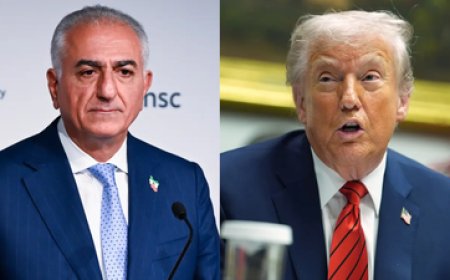
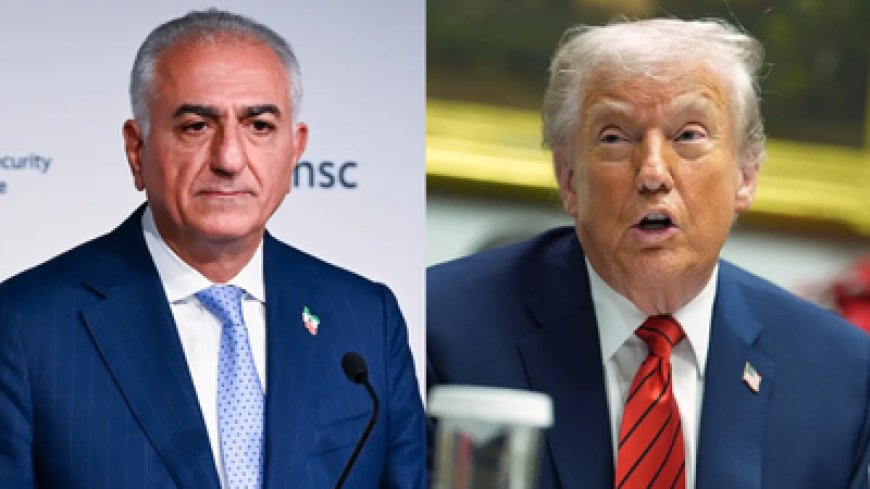
Central to this shift is the presence of Reza Pahlavi, son of Iran’s last Shah, at the 62nd Munich Security Conference (MSC). His explicit request to U.S. President Donald Trump to support the protesters' will to "bury" the ruling system signals a strategic phase-shift in both the exiled opposition's strategy and Washington’s foreign policy. This report analyzes these developments, regional military capacities, and proposed roadmaps for a transitional era.
The Munich 2026 Paradigm: From Reform to "Interment"
The 2026 Munich Security Conference became the platform for redefining Iranian national demands. Eschewing the rhetoric of "behavioral change," Reza Pahlavi declared that the demand on the streets is the definitive end of the regime. He emphasized to international officials that the blood spilled in recent months serves as a clear message: Iranian society is no longer seeking to repair current structures but is demanding international partnership to "bury" the regime.
Addressing Trump: Fulfilling the "Help is on the Way" Promise
A pivotal moment in Pahlavi’s speech was his direct address to Donald Trump. Recalling the President’s message to protesters that "help is on the way," Pahlavi called for tangible action. This appeal comes as Trump stated in February 2026 that a power shift in Tehran is "the best thing that could happen." This linguistic alignment between the opposition leadership and the White House signals to those inside Iran that the era of diplomatic isolation for the opposition has ended.
Strategic Diplomacy and Side Meetings
Beyond the main stage, Pahlavi engaged in high-stakes diplomacy with European and Ukrainian officials, including Volodymyr Zelenskyy. He argued that the fates of freedom in Iran and Ukraine are intertwined, highlighting the destructive role of Iranian drones in global conflicts. While Senator Lindsey Graham joined panels to call for decisive action, he maintained diplomatic caution regarding the formal endorsement of Pahlavi as the ultimate successor.
The Legacy of the 12-Day War (June 2025)
The structural weakening of the regime cannot be understood without the June 2025 conflict. A 12-day military engagement, initiated by Israeli strikes on nuclear and military sites, crippled the IRGC’s air defense and command chain. On June 22, 2025, the U.S. intervened directly, striking Fordow, Natanz, and Isfahan with bunker-buster munitions.
Strategic Casualties & Aftermath The high-intensity conflict resulted in over 600 Iranian deaths, including key figures like Hossein Salami (IRGC Commander-in-Chief) and Mohammad Bagheri (Chief of Staff). This command vacuum, coupled with the displacement of 9 million people from Tehran toward the north, created a deep collective trauma that now fuels the current protests.
Bloody January 2026: "Genocide in Digital Darkness"
The protests of January 2026 (Dey 1404) are recorded as the deadliest encounter between the state and the nation in modern Iranian history. Following a direct order on January 9 to suppress dissent "by any means necessary," security forces engaged in systemic violence.
Discrepancies in Casualty Counts While the office of President Masoud Pezeshkian cited approximately 3,000 deaths, independent bodies report staggering figures. Iran International and The Guardian estimate the death toll between 30,000 and 36,500. International observers have described the massacre, conducted under a total internet blackout, as an "Iranian Tiananmen."
Transition Roadmap: The "Iran Prosperity Project"
To address fears of post-collapse chaos, Pahlavi unveiled the 180-page "Iran Prosperity Project" in Munich. This document outlines the management of the first 100 days following a transition, focusing on the continuity of essential services (water, power, healthcare) to prevent administrative collapse.
The Four Core Principles of the Transitional Government
Pahlavi stipulated that any political faction adhering to these four principles could participate in the interim government:
-
Territorial Integrity: Rejection of separatism.
-
Secularism: Separation of religion and state.
-
Legal Equality: Regardless of religion, ethnicity, or gender.
-
Parliamentary Democracy: Future governance determined by the ballot box.
Pahlavi maintains that his role is strictly a "facilitator" rather than a seeker of personal power or a restored throne.
Geopolitical Outlook and Scenarios
In February 2026, Iran stands on a historical precipice. The shift from "strategic patience" to "maximum pressure" by the U.S. suggests three likely scenarios for the coming months:
-
Dual-Pressure Collapse: A combination of a national uprising and targeted U.S. military strikes to paralyze the IRGC leads to a central power vacuum and the start of the transition.
-
Internal IRGC Coup: Mid-level IRGC elements move against the clerical leadership to negotiate a "controlled transition" with the West and the opposition.
-
Regional Conflagration: An attempt by the regime to "export the crisis" leads to a direct, months-long war with the U.S. 5th Fleet and Israel.
Conclusion: Reza Pahlavi has positioned himself as the sole viable alternative with a structured plan. However, his ultimate success will be determined not in Washington or Munich, but in the streets of Tehran and his ability to co-opt the middle-tier of Iran’s military and administrative sectors.