














What Is Affordability?
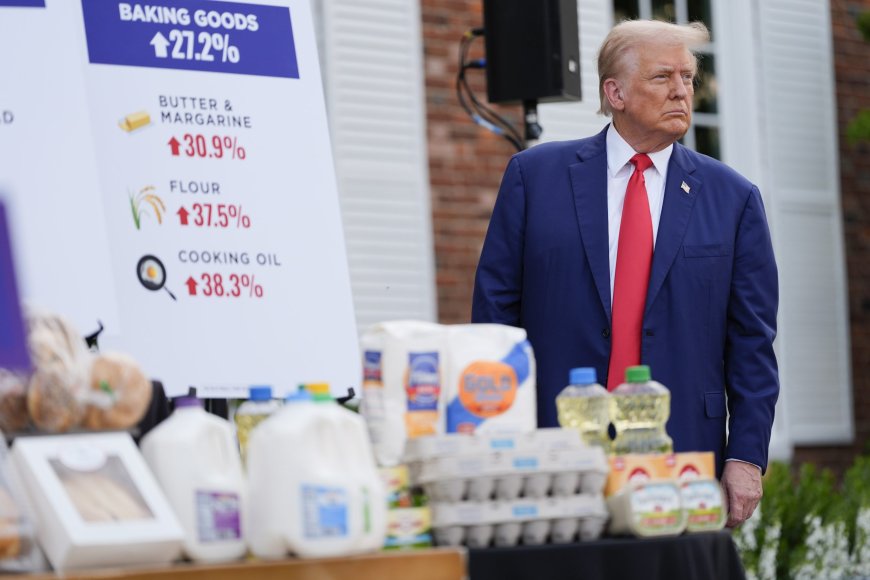

Democrats lost the 2024 elections over an electorate angry that life was becoming ever more unaffordable. In 2025, they flipped the script, racking up a series of impressive wins by centering concerns about the cost of living. Affordability politics has become the party’s “new winning formula,” according to Derek Thompson, the former Atlantic writer.
And, as Thompson noted, affordability works well as the Democratic tentpole, in part, because it’s malleable enough for centrists, progressives, socialists, antimonopolists, and everyone else in the left-of-center political family to latch onto their own interpretation.
Still, the matter of what “affordability” really means is, as with all the great questions of our times, being litigated on Substack. Paul Krugman, Matt Yglesias, Brian Beutler, Jared Bernstein, Aaron Rupar, G. Elliott Morris, Catherine Rampell at The Bulwark, Meidas Touch (with former Trump-fixer Michael Cohen, of all people), and more have all weighed in on the topic in recent weeks and put forward different views.
In stark contrast, Yglesias argued that it was simply a matter of nominal prices, while Krugman emphasized the importance of broadening the definition beyond purchasing power to include fairness, stability, and “economic inclusion.” Beutler, I think, makes a compelling case that the crux of the matter is “perceptions of economic liberty.” None of those is wrong (though the nominal prices story is wildly superficial), but all are incomplete.
When people talk about affordability, they are, as Beutler notes, pondering whether they “feel like hard work has procured them greater freedom.” Where he goes astray, though, is saying that this is distinct from their ability to make purchases. Different, yes. Separate, no.
In the Biden administration, the prevailing view was that prosperity could be created by boosting income and investment, which the administration was generally successful at. This was the lesson Democrats learned from the Obama years: insufficient fiscal stimulus will leave the economy floundering, the job market weak, and the public angry. Biden’s approach may have worked if not for a series of exogenous events that led to serious inflation, for which he was blamed (including by some of the writers now trying to parse affordability politics), despite having very little control over them.
The lesson that some are tempted to take is to focus on the price side of affordability. Pretty much everyone agrees that affordability is, at least in part, a function of income and the price level. So, if people won’t be satisfied with the Obama-era focus on maintaining purchasing power by preventing inflation, or with the Biden approach of boosting income, that must leave policy that affects the price level, right? Well, yes and no.
While Zohran Mamdani headlined the discussion of Democratic gains in November, Mikie Sherill ran on an arguably more aggressive approach, promising to freeze utility rates. That’s one key example where, despite the protestations of pundits, policy clearly can directly coordinate price levels. A recent report from Groundwork Collaborative, Local Progress Impact Lab, and State Innovation Exchange outlined a suite of policies that states and municipalities could use to lower sticker prices in sectors that have the biggest impact on personal finance: food, housing, and healthcare.
But beyond lowering prices, an affordability agenda needs to reckon with how the economy feels. Nominal price levels certainly matter, but they are compounded by the proliferation of corporate rent-seeking that makes life feel like a never-ending series of extortions.
Since 2023, economists, pundits, and journalists have been grappling with the so-called “vibecession,” the idea that people’s negative perceptions of the economy sharply diverged from its actual state, first coined by Kyla Scanlon, the economics writer and social media influencer. Far too frequently, pundits concluded that the bad vibes indicated widespread economic illiteracy among the American public. Even more measured readings of the situation from figures like Paul Krugman were dismissive of the possibility that economic complaints could actually be built on something real, that the issue is with the statistics and not the sentiment, insisting that “The economy isn’t actually bad—in fact, it’s in remarkably good shape.”
But there needn’t be a contradiction here; the statistics we have traditionally used to judge the economy may be healthy, yet the economy may still be bad. As Eugene Ludwig describes in The Mismeasurement of America—reviewed by top Biden economic advisor Jared Bernstein in the Monthly—there are significant shortcomings in economic key measures, including official employment and inflation rates. Ludwig demonstrates that if the “basket” of goods and services whose prices are used to calculate the Consumer Price Index were restricted to those that working Americans spend most of their income on (housing, energy, food, etc.), the rate of inflation in recent years would be markedly higher.
This is just one instance where economic measures and economic reality diverge. For example, “inflation” as a technical measure also does not include interest rates, which is important for mathematical reasons, but excludes a significant cost increase, rises in the cost of credit, from most official metrics. The CPI does not include home insurance premiums, which have been skyrocketing. If it did, the 2023 CPI increase of 3.4 percent would have been almost a full percentage point higher. Similarly, the often-used “core inflation” measure excludes food and energy prices because of volatility; both tend to be very noisy data sets. But those are two of the areas where soaring prices have squeezed Americans the most! This has led to the popularization of “anti-core inflation,” a measure that excludes energy and food and was introduced by the financial journalist John Authers.
This is just one way in which the experienced economy and the statistical economy diverge. For half a decade, we have all been living under the threat (or promise, depending on who you ask and how much stock you have in Nvidia and the Silicon Valley giants developing the technology) of “Artificial General Intelligence” that will be able to do a great many jobs better than humans. Even before actual layoffs began—and even those “AI-driven” layoffs may be firms seeking an excuse, according to research outfit Oxford Economics—it has been all but impossible to avoid hearing about the AI revolution. Even as technology advances to new heights and brings new possibilities, it is driving increasingly apocalyptic economic anxiety.
The reason why the cost of living has become the anchor of our political discourse is not just because people’s lives are hard and they feel overwhelmed, though that is certainly a key factor. It’s also because, even where the price and quality of goods have improved, it too often feels worse. Cars are objectively higher quality, safer, and more efficient than ever before, so a case can be made that the cost is, relative to quality, as affordable as ever. But car companies now use proprietary technology to force owners to use in-house (or at least affiliated) repair services, which means that you or your neighborhood mechanic can’t necessarily fix that minor issue anymore. Now you must pay a premium to take your vehicle to a certified mechanic. But that’s necessitated by proprietary software, not anything inherent to the good. And it’s very aggravating to pay a premium you know is unnecessary just because the company can compel you. As Representative Marie Glusenkamp Perez, the Washington Democrat, put it: “A focus on what is good means a right relationship to our stuff. We don’t want a black box that is uncontrollable. We don’t want to be perpetual renters of disposable crap. We don’t want to rely on other people being exploited in some other country or in a mine somewhere. We want things that last.”
Similarly, if you lost your spare car key for a 2004 model, you could go to the hardware store and get a copy of the one you still had for a few dollars. If you lose the spare key fob for your 2024 model, you likely need to visit an official dealership and pay hundreds of dollars. The shift is somewhat understandable because modern fobs have a lot of fancy technology. But car companies are deliberately making cars that only use such fobs and have no traditional key at all. Some companies now let you use an app to unlock the vehicle, which eliminates the need for replacement fobs, but it leaves the owner at the mercy of the car company. The key itself grants control as well as ownership.
Cars are now loaded with features that justify higher prices while degrading the user experience, even when they save the manufacturer money during production. Take, for example, the move to shift all controls to touchscreens and reduce the number of physical controls; those touchscreens are cost-saving, but they’re used as a selling point to justify higher consumer prices. And it’s getting harder and harder to opt out of such boondoggles.
As James Pogue wrote in The New York Times, “It’s all but impossible to go into any rural bar in America today, ask for thoughts on pickup trucks and not hear complaints about the size of trucks these days, about touch screens and silly gimmicks manufacturers use to justify their ballooning prices. Our economy, awash in cheap capital, has turned quality used trucks into something like a luxury asset class.”
Increasingly, the economy has been forcing people into licensing and out of ownership. In Glusenkamp Perez’s words, firms are turning us all into “perpetual renters,” both by restricting our control over goods we own through practices like proprietary repair restrictions and by outright doing away with ownership itself.
Back in the day, when you bought a computer program, you owned that copy of the software and could modify or use it (more or less) however you wanted as long as it didn’t violate intellectual property rights. Now, most software is licensed, and it’s becoming increasingly common that even booting it up requires agreeing to an End User Licensing Agreement that acknowledges that the user has no ownership of the program, restricts what uses are permitted, and often includes other stipulations like class action waivers or binding arbitration clauses, which preclude pursuing legal recourse.
This same type of trend is borne out as industry after industry shifts from selling ownership of goods to selling use privileges. It’s often called the “access economy,” a euphemism for a rentier economy.
Some economists and pundits have been puzzled about why economic sentiment has been so persistently negative, even though wage growth, job creation, and purchasing power have been relatively strong in recent years. A lot of it has to do with a major decline in people’s control over their own material lives. Beutler’s term “economic liberty” is apt, though his conception of it is limited in distilling how captive consumers have become. This captivity does beget real price increases through practices like surveillance pricing, but it also teaches people that they are always at the mercy of corporations. Indeed, Google’s Sundar Pichai recently boasted that the company’s platform would enable individual-based pricing by tracking consumer behavior across a range of online retailers.
Writing with a pen and paper comes with many limitations, but they don’t have terms of service. Microsoft Word does. Most of our economic lives are now at the mercy of a handful of platform monopolies that can sever our access at a moment’s notice. An independent filmmaker used to have a much harder time getting people to see their movies. It would require recording and selling tapes or discs or negotiating screenings with theaters. Now, they can just upload the video to YouTube, TikTok, and Instagram. But before, they had far more control over that video. Now, any of those apps could demonetize or delist the video, completely cutting off the creator’s income. At the same time, there are far more creative people able to make a living from content creation. On the other hand, as YouTube has slashed residuals and enabled vindictive copyright strikes, an ever greater share of that content has morphed into advertisements. Not to mention that your work will be appropriated by AI “artists” without any compensation.
And that’s the thing. In some cases, prices are genuinely being elevated above what they should be in a competitive market. But even in instances where material well-being is indisputably better on average, we inhabit a perpetual state of powerlessness.
The shift from an ownership model of consumption to an access model is key to understanding why focusing on prices alone won’t be enough and why tackling corporate power through antitrust and smart regulation is essential.
The vibecession isn’t just about why economic sentiment and economic performance don’t align; it’s about what a “good economy” even means. For a long time, policymakers, economists, and pundits have taken it to mean stable prices, low unemployment, and strong GDP growth. But to the living, breathing people who comprise the economy, its health is more than statistics. The economy is us. If our economic lives feel bad, then in a crucial sense, the economy is bad.
Employment, price stability, and growth rates are important. But they aren’t the only important things. It matters how the economy feels to those in it, and there are reams of evidence that show people consistently care about other aspects of economic life that are absent from statistics: a sense of community, finding purpose in their work, fairness, and self-determination. And many of these less tangible priorities have been eroded by the rising tide of corporate power and concentration that began under the Carter and Reagan administrations.
Simultaneously, corporations facing less competition have used their power to extract additional rents from workers and consumers at every turn. Increasingly, every transaction feels less like an exchange and more like a mugging. This is borne out across many well-covered trends, including shrinkflation, where product sizes are subtly reduced to extract extra revenue per unit, and the inescapable omnipresence of gambling, with each one of us seemingly being asked to place a wager every time we do anything at all. And as platform monopolies have faced dwindling competitive pressure, they have substantially degraded their user experience, a process Corey Doctorow has dubbed “enshittification,” as detailed in his new book.
Doctorow focuses on products like Google’s search engine and social media apps, which have been retooled in recent years in ways that benefit advertisers and boost revenue, but also make the products less usable. But enshittification is all around us. We must play Russian Roulette with streaming services to watch a football game with our friends and families. There are banner ads behind the commentators during the halftime show. The pregame coverage is always sponsored by sports betting companies and tailored to entice viewers to wager on that app. The highlight reels are “brought to you by” a major corporation. Everyone has always understood that this sort of event was an economic interaction, paying the subscription or ticket price, plus sitting through some ads, in exchange for entertainment. But now the entertainment service itself feels like yet another opportunity to be squeezed ever harder to generate shareholder value.
Back in 2012, former Fed Chair Ben Bernanke noted, as reported by Pogue, that we have no “good measure for ‘autonomy,’ the importance of ‘social ties and community’ and ‘perceived inequality.’” Bernanke called for developing “better and more direct measurements of economic well-being.” Our “vibecession” episode reflected a failure to take that advice to heart; we not only didn’t develop those more holistic measures of community, autonomy, and economic liberty, but our discourse also forgot the gap Bernanke highlighted in the first place.
There are many concrete policy actions to lower prices, raise incomes, and foster prosperity. But a real affordability agenda needs to go beyond conventional macroeconomic metrics and address how exhausting and disempowering participation in the modern economy has become. Until then, no matter how good the statistics get, the vibes will still be off.
The post What Is Affordability? appeared first on Washington Monthly.